Does acupuncture actually work?
本文目前只有英文版。如有问题,欢迎发短信用中文咨询。
Yes. For chronic pain, acupuncture works.
In controlled trials with more than 20,000 patients, people who had acupuncture ended up with less pain than people who had none — and less than people given fake needling.
A year after their last session, most of that relief was still there.
It isn’t the answer to everything. But for back, neck, joint and headache pain that has lasted months or years, the evidence is clear.
Here is what actually happens when a needle goes in.
In this post:
- What the needle does
- What the trials show
- What it means for treatment
What the needle does
A needle isn’t a mystical event but a small, precisely placed stimulus, and your body answers it the way it answers anything that disturbs tissue: by releasing chemicals and firing nerves that ease pain and help the area settle and recover.
Over the past fifteen years, researchers have traced three links in that chain.
#1: It releases a natural painkiller
- A needle in muscle prompts the surrounding cells to release adenosine, which quietens the nerve endings that carry pain.
- In mice bred without the receptor adenosine acts on, the relief never arrived, which points to this being the mechanism rather than a coincidence.
- The effect was measured first in mice and later confirmed in people.
#2: It calms inflammation so the body can heal
- Inflammation is the body’s first response to injury, but when it lingers it keeps tissue sore and gets in the way of repair.
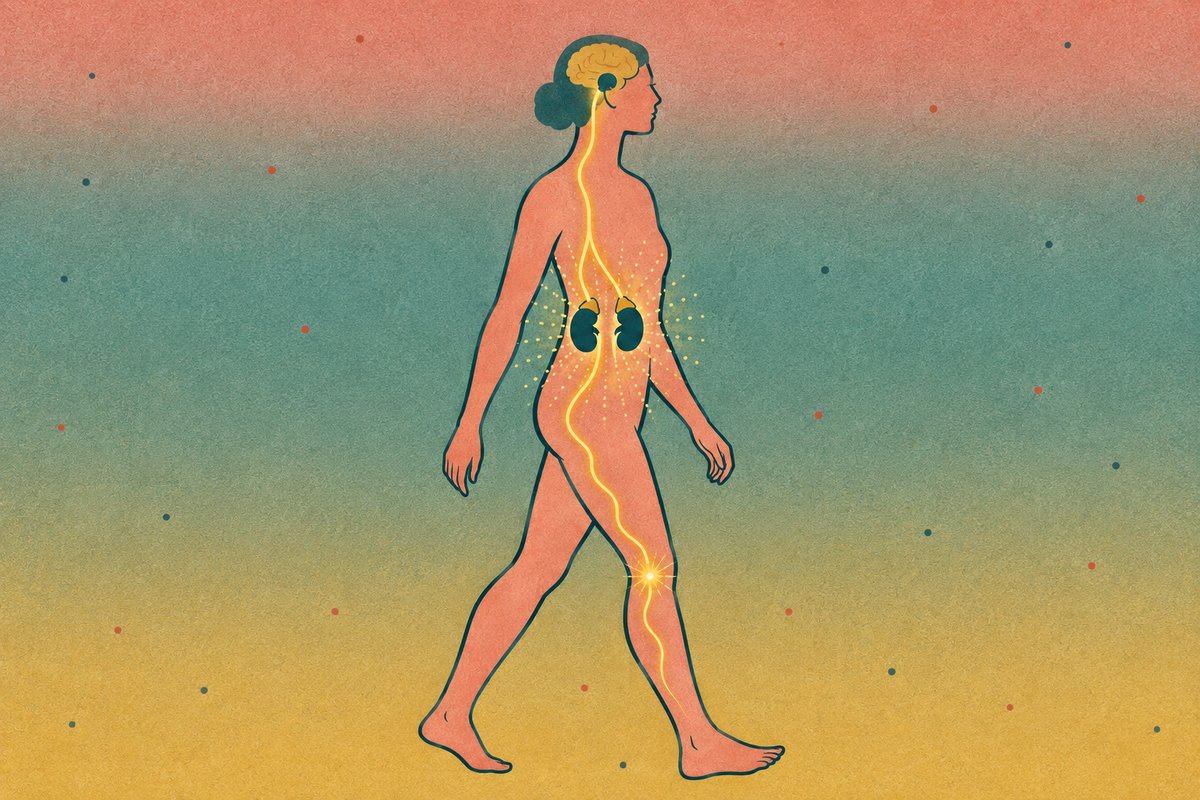
- In 2021, researchers at Harvard and Fudan traced how a needle turns it down, using electroacupuncture (a small pulse run through the needle) on a point just below the knee.
- Deep sensory neurons carried the signal up to the brainstem, which told the adrenal glands to release hormones that calm inflammation, and the inflammatory chemicals in the animals’ blood fell.
- A needle placed in the shin ended up dampening inflammation throughout the body, clearing the way for healing to carry on.
#3: Where you needle matters
- The same stimulus on the abdomen left that pathway quiet, while the point below the knee switched it on.
- The reason was anatomical, because those deep neurons sit exactly where the classical acupuncture point sits.
- Chinese medicine has held for two thousand years that particular points act far from where the needle goes in, and the anatomy is only now catching up.
What the trials show
- back and neck pain
- osteoarthritis
- chronic headache
- shoulder pain
A year after treatment stopped, about 85% of the improvement was still there. For something you have carried for years, that staying power counts for more than the size of the effect.
What that means for your treatment
- Longer-standing pain responds best. The strongest results are in people who have hurt for months or years, not those who strained something last week.
- It takes a course. One session is rarely the answer. Visits usually start close together and spread out as things improve, because you are asking a nervous system to unlearn a habit it spent years acquiring.
- You don’t have to believe in it. The benefit shows up in sceptics too. And it holds once treatment stops.
For everything else, and especially for pain that has outlasted everything you’ve tried so far, the evidence says a course of acupuncture is worth your time. Request a first visit and we’ll look at where your pain started and how it has changed, then plan your treatment around it.
References
- Vickers AJ, Vertosick EA, Lewith G, et al. Acupuncture for chronic pain: update of an individual patient data meta-analysis. The Journal of Pain 2018;19(5):455–474.
- Liu S, Wang Z, Su Y, et al. A neuroanatomical basis for electroacupuncture to drive the vagal-adrenal axis. Nature 2021;598:641–645.
- Goldman N, Chen M, Fujita T, et al. Adenosine A1 receptors mediate local anti-nociceptive effects of acupuncture. Nature Neuroscience 2010;13(7):883–888.
- Takano T, Chen X, Luo F, et al. Traditional acupuncture triggers a local increase in adenosine in human subjects. The Journal of Pain 2012;13(12):1215–1223.
This article is general information, not medical advice, and results from treatment vary from person to person. Talk to your doctor or a licensed practitioner about your own situation.