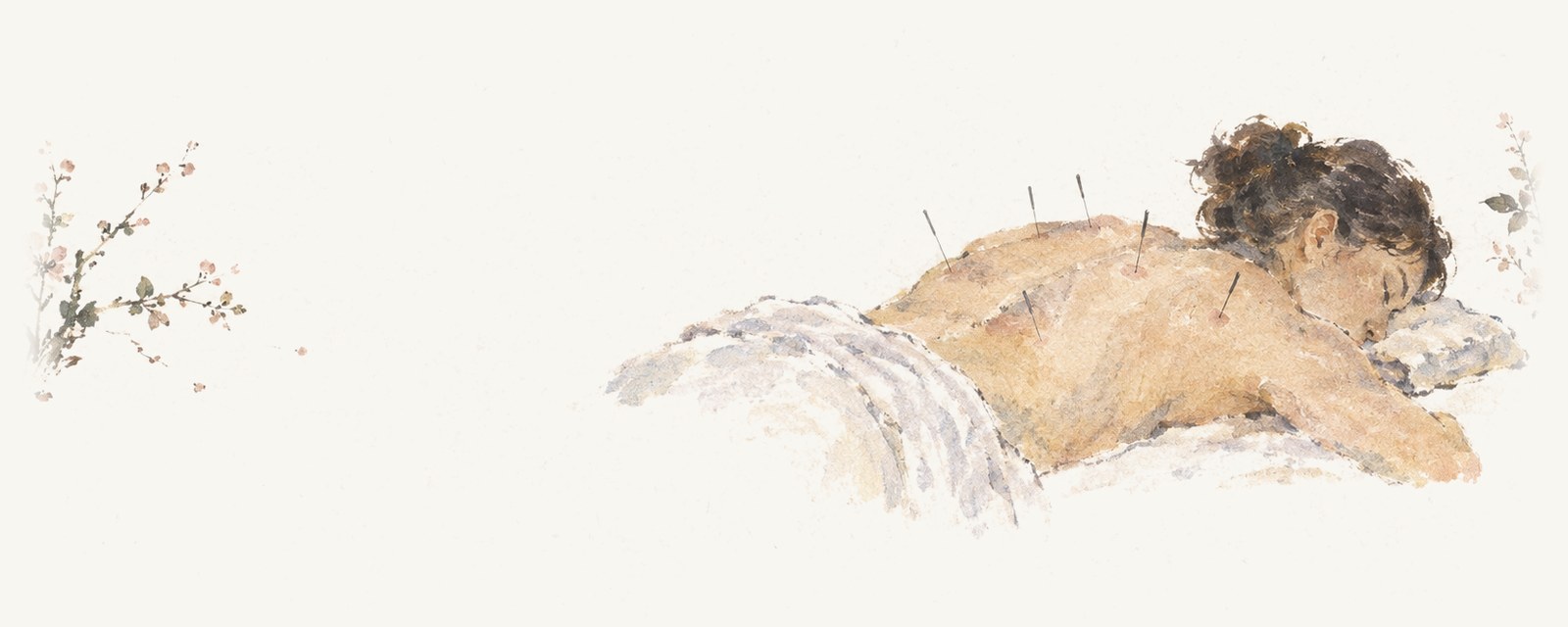
Hair-fine, single-use needles at points along the body’s channels — often a long way from the spot that hurts. A hand point for a headache. A leg point for a back that has locked up. Often with a gentle electrical pulse added to the needles.
What we use it for
Back & neck pain
Lower back, sciatica, disc-related pain
Migraines & headaches
Chronic and tension-related
Neuropathy
Nerve pain, numbness, tingling
Arthritis & joint pain
Knees, hips, shoulders, hands
What a session is like
We talk first
Where it hurts and what you’ve tried.The needles
You lie down in loose clothes. Most feel a dull warmth, not a prick.A gentle pulse
A light current on a few of the needles.Resting
You rest a while, then they come out.More about the gentle pulse (electroacupuncture)
A gentle electrical pulse runs between a few of the needles while you rest, keeping the stimulation steady. We tend to use it for long-standing pain and for nerve pain, numbness and tingling.
It feels like a light tapping or buzzing, and we turn it down whenever you say. There is nothing extra to book.
Not used if you have a pacemaker or other implanted device, or are pregnant — we needle by hand instead.
在您休息时,轻柔的电脉冲在几根针之间通过,让刺激保持稳定。我们多用于长期疼痛,以及神经痛、麻木和刺痛。
感觉像轻轻的敲击或嗡嗡的震动,您说一声我们就调小。无需另外预约。
如您装有心脏起搏器或其他植入式装置,或正在怀孕,我们不使用电针,改为手法行针。
What the research says
Acupuncture is also one of the most closely studied treatments for chronic pain. The largest analysis to date, pooling 39 trials and 20,827 patients, found acupuncture helped back and neck pain, osteoarthritis, chronic headache and shoulder pain — and most of the improvement was still there a year after treatment stopped.
针灸也是慢性疼痛治疗中研究最深入的方法之一。迄今规模最大的分析汇总了 39 项试验、20,827 名患者,发现针灸对腰颈痛、骨关节炎、慢性头痛和肩痛都有帮助——而且停止治疗一年后,大部分改善依然存在。
Vickers AJ, et al. Acupuncture for chronic pain: update of an individual patient data meta-analysis. The Journal of Pain, 2018.

Tell us what hurts and we’ll work out where the needles go.